


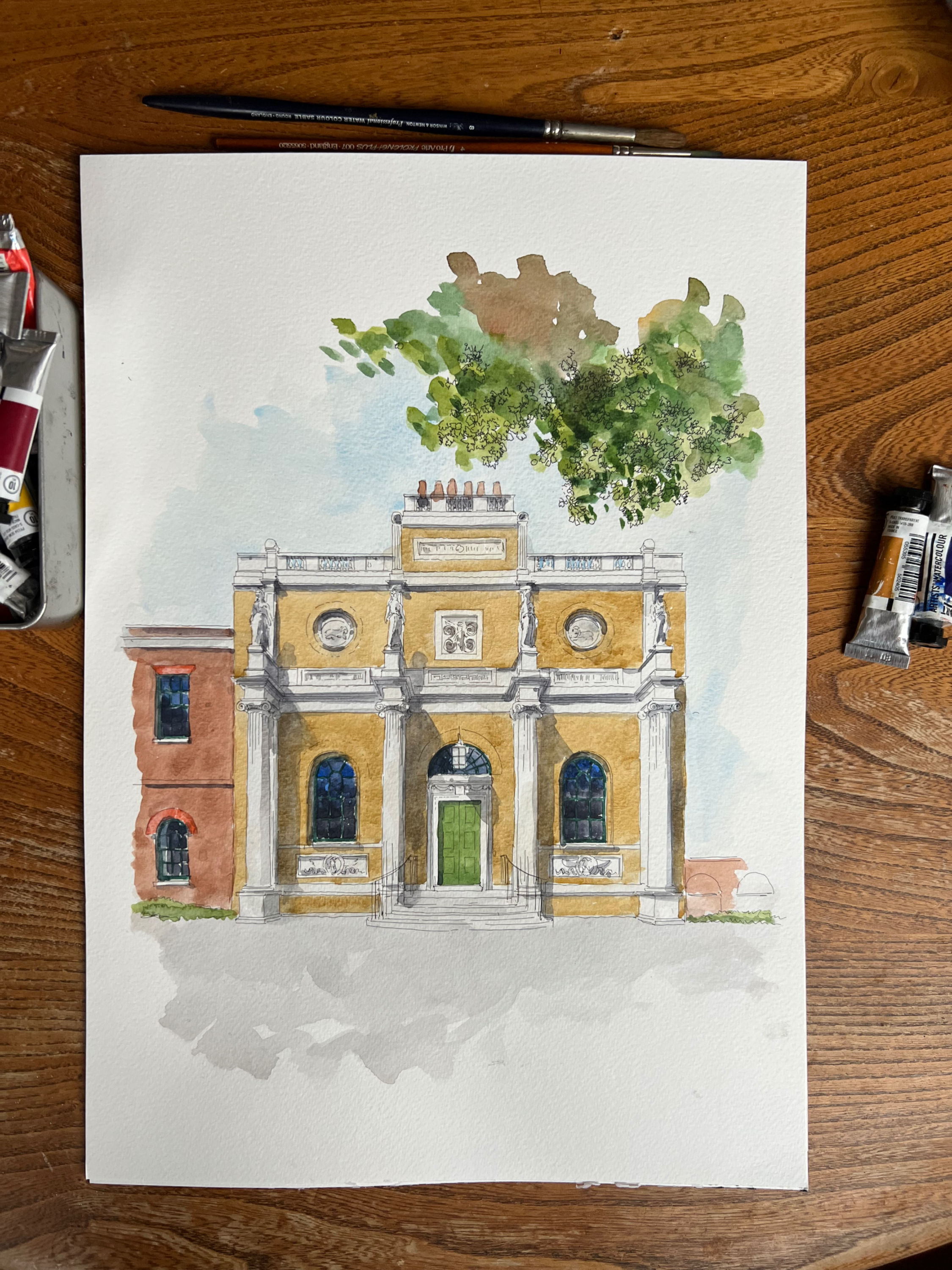

A building of an imagined history hope and future dissapointment but of absolute beauty.
Soane bought Pitzhanger in 1800, partly because it had been a place where he apprenticed as a teenager, and he rebuilt it as a “portrait” of his ideas in brick, plaster, stone, and light. He kept George Dance’s earlier south wing, so the house becomes a dialogue
between mentor and pupil rather than a complete blank-slate rebuild. The whole scheme was meant to advertise his talent to clients and to create a family dynasty of architects that never quite happened.
Soane was famous for manipulating light: ceiling lanterns, skylights, colored glass, mirrors, and carefully screened openings made rooms seem larger, softer, and more theatrical than they really were. At Pitzhanger he also created Roman ruins to give the house an invented ancient past, linking it to Rome, monastic England, Tudor history, and then his own era. That fake-backstory approach is very Soane: he liked architecture that could tell a story, even when the story was invented.
There is also a family secret of sorts: Soane hoped the house would launch his sons’ careers, but his eldest son abandoned architecture and married against his wishes, and the younger son also became estranged from him. After only about ten years Soane sold Pitzhanger, and contemporary reports suggest it took 65 newspaper adverts before a buyer was found. That gives the house a bittersweet edge: it was conceived as a legacy, but it quickly became a disappointment.
