


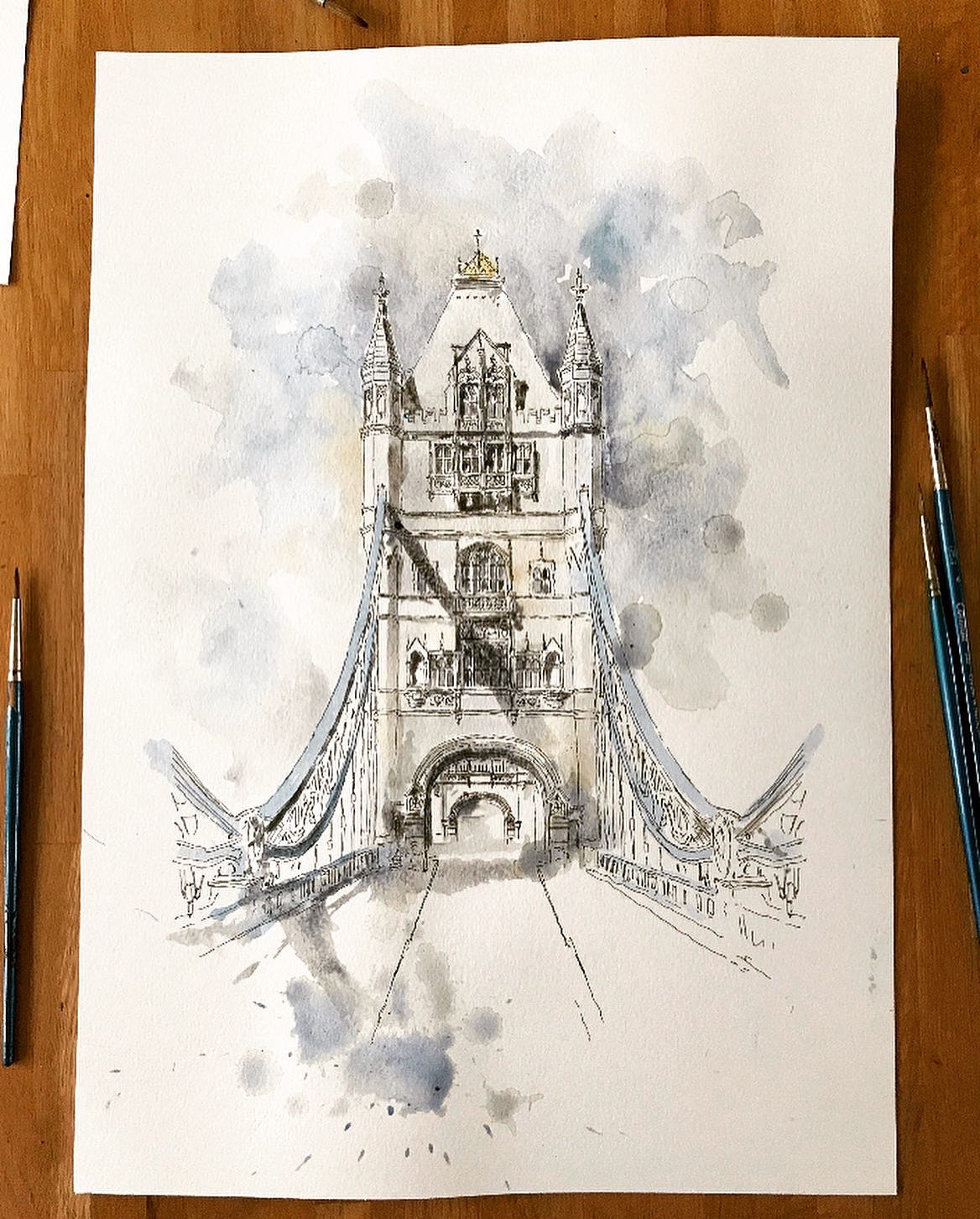
Tower Bridge is London’s most iconic moveable bridge — a double-leaf bascule (drawbridge) structure that spans the River Thames between the boroughs of Tower Hamlets and Southwark. Completed in 1894, it’s one of the world’s most recognisable landmarks and a defining symbol of London.
Tower Bridge is actually three bridge types in one:[org]
Suspension: Side roads from towers to shore held by suspension cables
Bascule (French for “seesaw”): Central road sections lift on pivots using hydraulic/liquid-powered machinery
Cantilever: Upper walkways built using horizontal structures anchored on one side
The two glass-covered walkways connecting the towers sit at 42 meters (138 feet) above the Thames. Originally designed to allow pedestrians to cross while bridge was raised but you had to climb a lot of stairs (84m worth!). It is now part of the museum.
Interesting facts...
One of the blue lampposts on the North bank (Tower of London side) is an imposter—it’s actually a disguised cast-iron chimney that used to vent smoke from a coal fire in the Royal Fusiliers room below. Guards warmed themselves there while on duty. After the 1956 Clean Air Act banned coal burning, it went unused, but Victorians cleverly disguised it as a lamppost to maintain the aesthetic.
